

There are two aspects of huge importance when starting a project in discussion with the client, how they want their home to look and also to feel.
As human beings we are emotional creatures and the more we surround ourselves with things or environments that are aligned with our emotions and feelings the happier we can be.
We cannot ignore as well, that there is an important and direct relation between what we see and what we feel, remember: our emotions are being constantly fed by the power of our senses.
This is why it is so valuable when I can define with the client how the space needs to look: is there any clear reference he has? Any style he loves? Any image he is seduced by?
It gives clarity of approach to the project, but what is going to shape it in the right way is what he wants to feel once living there.
The feel is probably the most difficult part as it is a combination of rational and emotional thinking and for me the only way to get closer to its understanding is talking, talking a lot with the client and listening to what is being said and what is not being said.
Right now I’m working on a project where once the client described what they want I sent an image that for me summarised their words and the client’s answer was: yes that is what we want.
I did not put a name on that style at that moment but it is what is known as Industrial Chic.
Industrial chic in a few words is the style that elevates an industrial style into something more sophisticated, hence the chic.
The use of raw materials like brick, concrete, iron, reclaimed timbers, worn surfaces and other raw metals and glass are so to speak, tamed.
Now, how to keep those “adjustments” in control so it does not lose its character? And what are the key elements that have to be present so it remains alive and strong?
Here are five points I would suggest you pay attention to:
1. Raw Surface
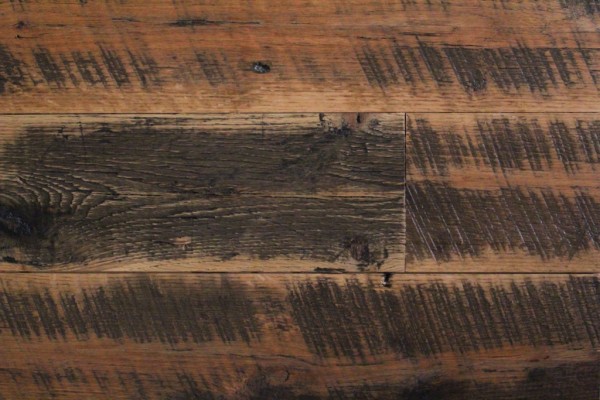
A “must have” definitely, is the presence, some how, of raw materials: brick, wood, concrete, iron, etc.
And when I say presence I mean they have to be noticeable, they have to mark the rhythm in how the space is perceived.
- Use of colour
Use of dark colours is important.

There is something “sombre” and enigmatic in the industrial look, this “spirit” needs to survive and be embodied in whatever you want to do.
3. Use of metals
Metals are a key part in what we define as an industrial look. If aspiring to the sophisticated version of it, I would suggest the use of bronze, brass, dark brass or pieces made with flat black iron.

- Balance
Having too much or too little of something can kill your scheme. If items are too sleek the look can get closer to the category that we call international or Scandinavian style.
The problem is that we never will get that close to it.
With too much rawness for instance you are going backwards and backwards in time.
5. Good taste or Harmony
This is where your sensibility will have the last word… the harmony between all parts should in the end make the space look beautiful, with the spirit of a well crafted industrial look taken to a point of beauty with such grace that it gives you a sense of serenity and energy at the same time.
Industrial chic aims for elegance and gets very, very close to the pure sense of the word but its charm is that it never reaches it.


