

Parts Low vases by Anna Torfs. Photography courtesy of Harlequin London. Good quality and beautiful vases are a must in well designed rooms. Being at the same level of wonderful natural flowers is not an easy thing and well designed and crafted vases make the task very easy. I like the strong and at the same time delicate texture of these pieces.
Glass is one of the oldest materials in the history of civilization (3000 years BC), however it is perceived as a contemporary material per excellence. This probably due to the fact that it is only recently that pure clear flat glass has been produced (XIX century).
The magic and beautiful presence of glass through time can be seen in the exquisite collection of the Victoria and Albert Museum and the collection in the British museum, among others. However I would say there are two moments in the history of human kind when glass acquired a dimension beyond that of being just decorative. Those two moments belong to the history of architecture: The Gothic Style and Modern architecture.
In the middle ages, innovative structural solutions in the way churches were built allowed big panes of stained glass to fill the gaps between columns and arches creating an atmosphere of unimaginable beauty, a mystical experience to the eyes and hearts of medieval men and women only familiar with the dark spaces of Romanic churches. This innovation started in La Sainte-Chapelle in France. Architecture-religion-beauty-and political ambitions found the perfect speaker, one made of stone and glass.
The second iconic moment is represented by the Seagram building designed by Ludwig Mies van der Rohe in 1958 in New York. It is truethat before this building there were others that used glass but this one, a product of the concept of International style, gave extraordinary importance to the aesthetic possibilities of structures in steel and how glass complemented them in a very symbiotic, honest and clear way, creating a model that still today prevails and that has big repercussions in the profiles of modern cities and the elements that make them possible, including the decorative arts.
Besides these two important references, we need to recognize that without glass the look of our cities, homes would not be, most certainly, the same. It is as omnipresent as the air we breathe, that is why I like to think of it as frozen air.
As designer I’m always being asked What is my style?. My short answer has to be “contemporary”. However it is such a broad term that almost it demands a second question. What sort of? But rarely it is being asked and the reason for that, I think, is because for most of the people contemporary style means the use of materials like glass, stainless steel, polished surfaces, well lit areas and impeccable fabrics and colours. It sounds correct, I would say, but there is more behind the use of that term.
So as a “contemporary” designer I love glass, love it in partitions, in furniture, in lights, in accessories, in art, etc. So I would like to share with you pieces that represent some of these disciplines. It is important to say glass is not a panacea; there does exist bad taste in the use of glass too that is really shameful.
Being glass, generally clear, it creates that sense of endless space or at least the optical perception of a larger space, and because of this it can be over used or misunderstood. As every material it demands understanding, attention, the right rhythm, respect and care. When this is achieved it is going to give you back that fulfilling feeling of ethereal beauty and impeccability.

Left: Air unit. Right Air Up bookcase (modular system) both from Galloti&Radice. Photography courtesy of Alberto Pavanello. Personally I prefer glass in furniture to be combined with other materials. I find extremely difficult to find well proportioned and good looking pieces of furniture made using 100 % glass. This side cabinet and bookcase offer an elegant contrast of glass and lacquer.
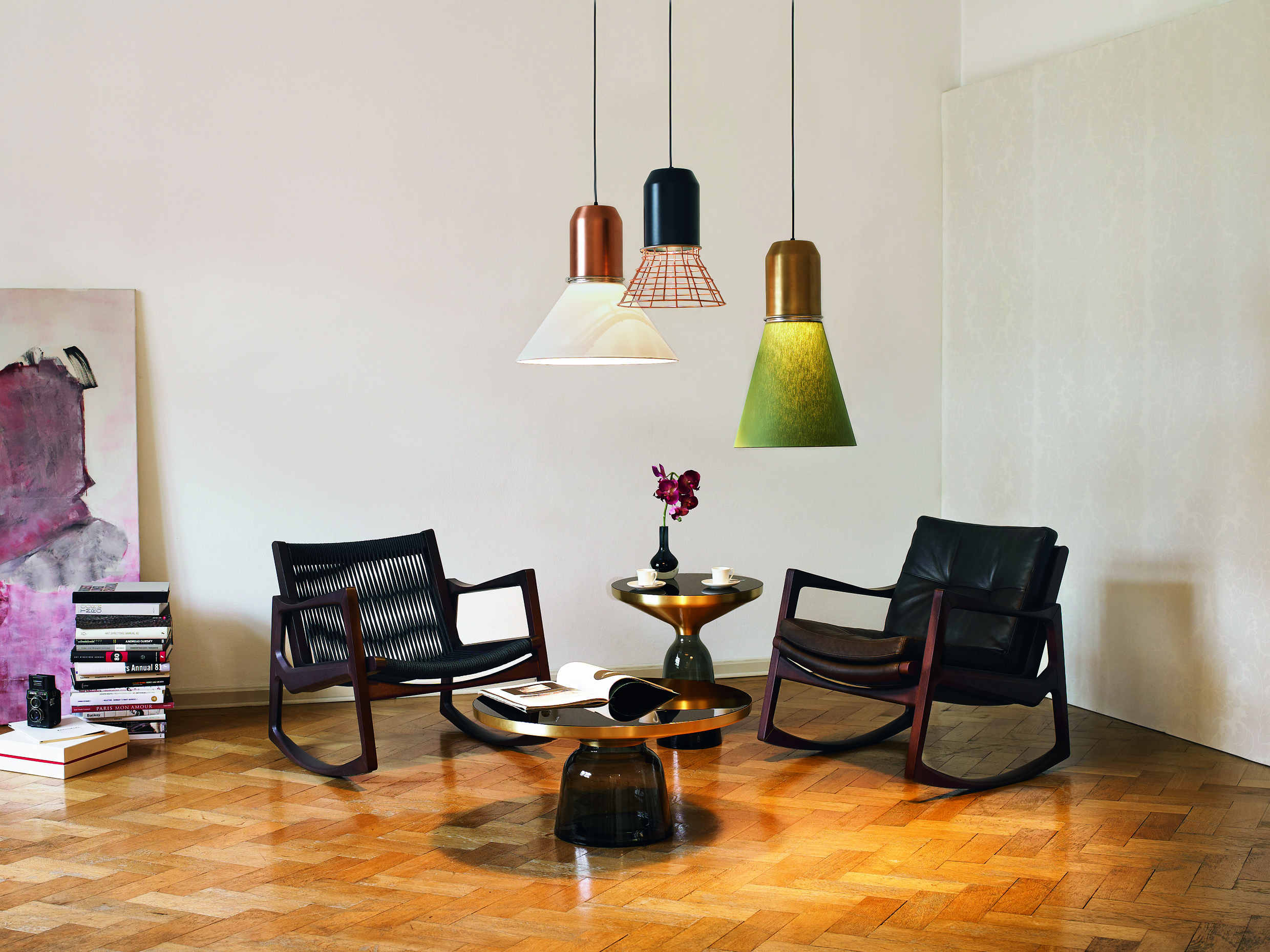
Bell Coffee and Side Table by ClassiCon. Photography courtesy of Aram Store. I chose these tables as for me their design captures the retro futuristic tendency of many actual proposals and because their base in glass bears the weight of that responsibility, the beautiful continuity between metal and glass is really great.
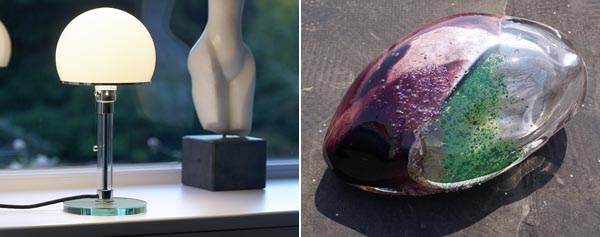
Left: Wagenfeld Lamp 24, 1924 designed by Wihelm Wagengeld by Tecnolumen. Photography courtesy of Aram Store. This beautiful Bauhaus lamp has defeated time, with almost 90 years old it looks as contemporary as ever. Mostly made in glass, it shows a well proportioned and delicate design. Right: Hand-Blown glass “stone” one of the 250 pieces in the installation “The Touch of the Oracle” by the artist Michael Petry. Photography courtesy of Michael Petry.
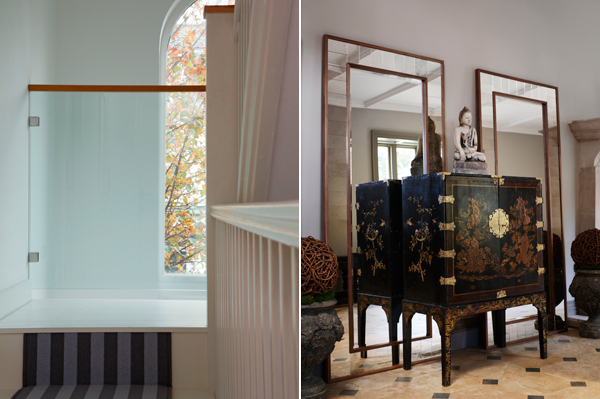
Left: Glass Balustrade designed by Diego Correa. The idea behind this design was to allow the view towards the big window not to be blocked. It creates a subtle frontier between the classic look of the stair and the beautiful contrast of the white wall and the tree.Right: Charleston Mirror by Simpsons Mirrors and Furniture. Photography courtesy of Simpsons Mirrors and Furniture. Mirrors are glass and as such they have to be in this small brief on glass. Mirrors bring elegance, scale, depth and beauty to a space.
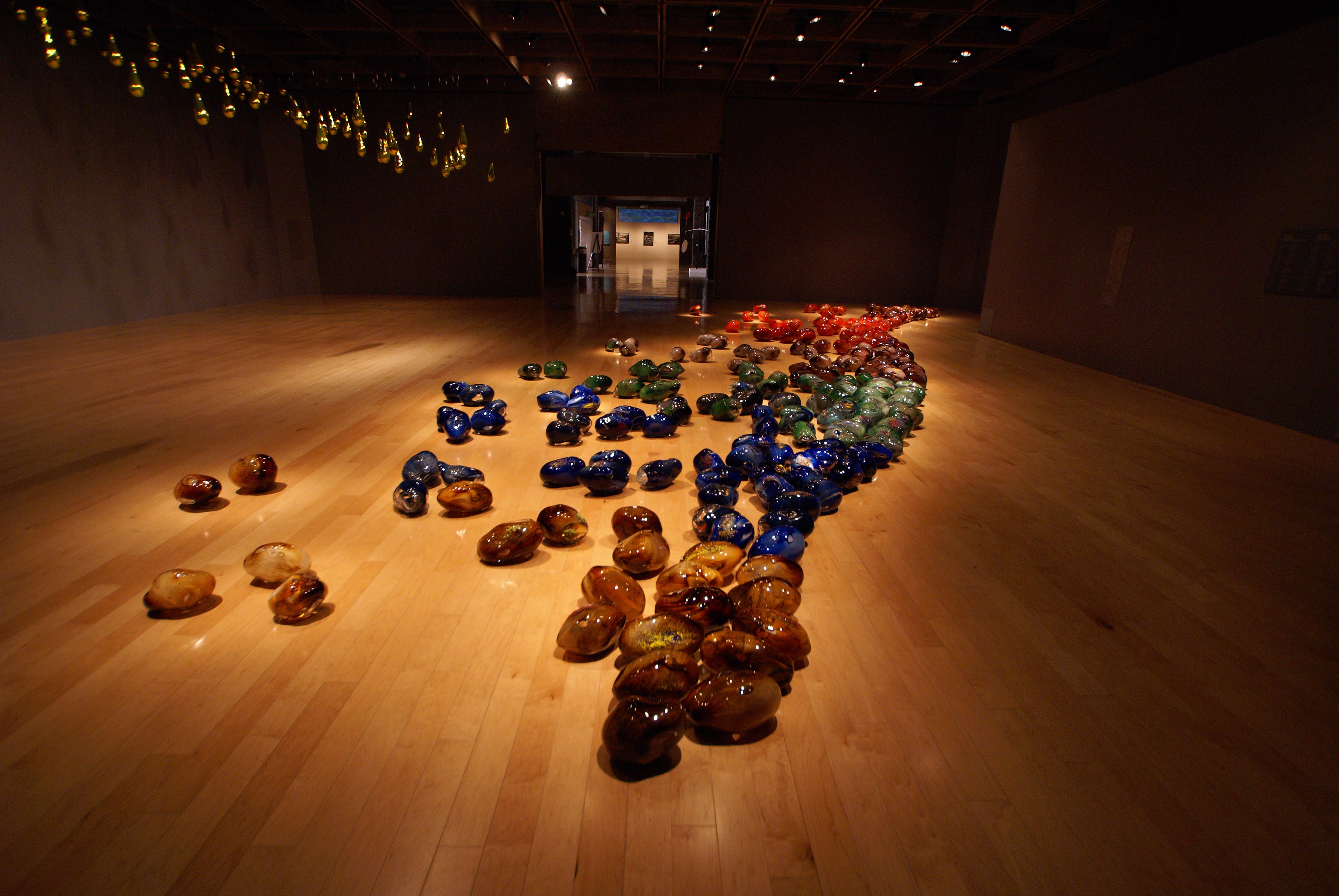
Installation “The Touch of the Oracle” by the artist Michael Petry. Photography courtesy of Michael Petry. At the foreground we can see 250 hand-blown glass “stones”, beautiful objects that condense all the expressive potential of glass. By themselves they have their own language and together acquire another meaning that each of us can feel or/and understand according to our inner world, perception and way of looking at things. What glass does here is make beauty play an important role in that understanding, dressing it.

Curved wall built using blocks of glass designed and made by Fred-Fred for a private residence in Paris. Photography courtesy of Fred-Fred. Partitions in glass give that intangible and contemporary look to spaces. Adding light as part of the feature creates an amber glow that makes the surroundings warmer and somehow futuristic at the same time.
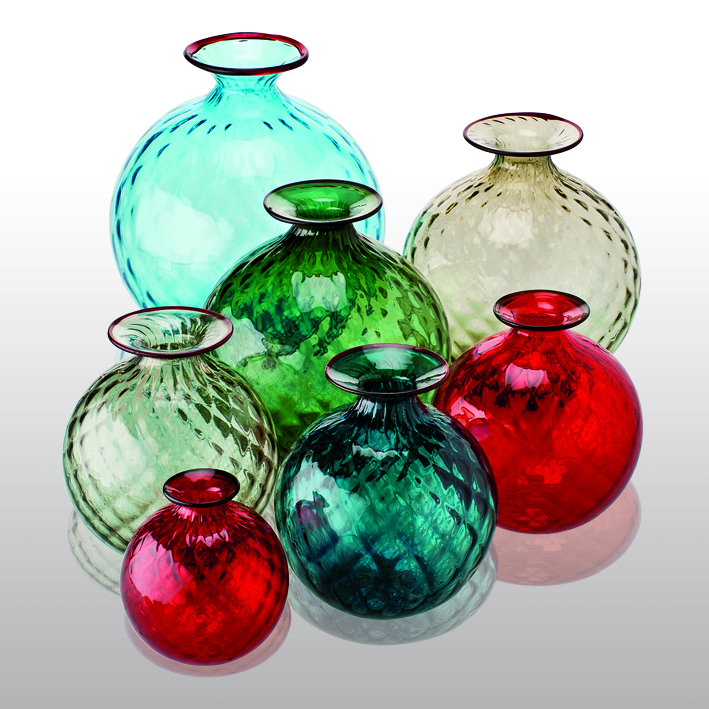
Balloton vases by Venini. Photography courtesy of Harlequin London. The use of colour is always challenging. Sometimes there is a thin line between good taste and a rather inelegant approach to colour. Choosing the right tone is key in great settings. Here we have good options.


