One of the “myths” related to the world of interiors is how expensive it is to hire an interior designer.
Of course as everything you buy either it is a product or a service the price you are keen to pay for it will depend on the value you perceive that product or service has to offer.
Now, let’s assume it is important for you to engage the services of an interior designer for whatever reason: time, vision, taste, technical skills, knowledge, expertise, complexity of the project, etc.
How do you put a price to the satisfaction of that need?
The thing is that as a client you don’t. It is the interior designer who according to his/her expertise and creative input will charge x or y amount for helping you with your need.
Your power is to accept or refuse the proposal based on what you think is relevant to you.
But before I share with you the general rules designers use for charging their fees it is really important you to understand that there are 2 points on which you need to focus that will help you to understand and then accept or refuse his/her prices:
Experience is one of them and Creativity/Taste is the other.
In regards to experience it involves basically knowledge in the areas related to interiors: from regulations, materials, building processes, detailing, furnishing, soft furnishing, lighting up to art and accessories. This knowledge is factual; it is based on information that professional has that can let him/her to solve specific problems or challenges. As it is factual it is possible to evaluate its cost depending on how the market is saturated or not with people with similar skills.
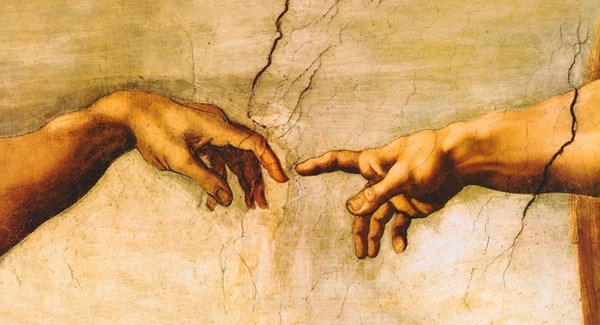
The other one creativity/taste relates to the “divine” act of creation which is individual in its nature, putting it hence closer to the world of art. Giving a price to it is extremely difficult as it is no possible you can compare a creation with other… it is emotional, subjective either you love it or not. It is precisely because its scarcity that the price can go up in an exponential way.
This is why when the talent of an interior designer is recognised of being closer to the creation of art then his/her prices won’t be based on his/her technical skills but that of pure creation and taste. If there is a market that will crave for that “eye” there will be a market that will pay a price for it.
Let’s not forget we are assuming that besides these 2 points every professional should be committed to values like honesty, integrity, fairness and respect.
Now let’s go to the core of the point on hand:
How interior designers charge their fees?
1.- Percentage on the cost of the project
It is probably the fairer way as both parties are aware of the work involved based on the budget the client is keen to spend given a specific brief and if he/her increases the scope of works he/she knows the fees will be affected in a proportional way.
How big that percentage will be depending on the skills that professional has and on his/her recognised creative talent.
2.- Fixed price
For this to work the brief/scope of works has to be extremely precise and accurate. If additional items are requested they will need to be negotiated. The key here is to avoid this to happen as much as possible or it can lead to resentfulness on your part for being charged for “everything” or on the designer part as he/she could feel you are taking advantage of the situation which can destroy the relationship.
3.- Percentage on the cost of the project + Sharing discount on products
Depending on the products to be purchased sometimes designers receive trade prices when purchasing directly. As a benefit for the client some designers share this discount with them which allows them to request a lower percentage on the cost of the project.
Purchasing can be an extremely time consuming task which time should be covered by that percentage of the discount that is being kept.
4.- Higher Percentage on the cost of the project + transferring to you all the discount on products
Other designers pass all their discounts to their clients but charge a higher percentage on the cost of the project as fee.
This can be very beneficial for the client if the chosen products have a very clear, honest and reliable source.
5.- Per hour.
This can be a practical option for very small projects but a very expensive one for medium-big projects. You do not have any control on the price. Design is a creative process and an emotional one and as such the amount of hours it can require cannot be easily measured.
The higher the standards you expect from your designer in terms of skills and creative input the more you will need to ask yourself how much would you recognise that being always aware of what will be the impact in your life or business for getting it right or wrong?.