

Cell Led Carpet by Lama. Photography courtesy of Lama
When Le Corbusier, the most famous and influential architect of the XX century, wrote the book-manifest in 1923 “Towards a New Architecture”, he described the house as “a machine to live in”. We need to consider this was an era where “utopias” were not the concept of the impossible; they were formulated as a real path to be followed in the mind of many who saw in the possibilities created by the industrial revolution and the invention of cars, the way for changing the life of citizens for ever, for good, challenging the chaotic Victorian cities and their habits.
Regardless of the huge differences between the understanding of what it meant by “ a home as machine to live in” then and by what it means today, almost one hundred years later, it is extraordinary how accurate that phrase is for describing how well a home performs or should perform nowadays.
Improvements in the way we build are obvious. We enjoy them day after day. Some of them have changed at a slower pace (like walls); others at a faster one (lighting). The development of new technologies that support these processes seem to be classified into those that are financially and commercially viable, and thus are implemented as soon as possible, and those, though possible, that are not accessible to the masses so they became the privileges of a small group at a high cost. The rhythm of this relationship obviously affects the way we interact with our homes and how efficient it can be, thus becoming a better machine, in other words: a home that works for making our lives more pleasant and efficient.
One of the most notorious changes in the way our homes operate is the highly sophisticated range of tools we have at our disposal regarding home automation. This option, though still expensive, has liberated our interiors of redundant visual clutter, leaving us the enjoyment of materials, surfaces, lights and colours in a more independent way.
Technology does not grow arithmetically, it grows geometrically. It has expanded and taken on everything that surrounds us, so we have new materials or new materials mixed with old ones. Some of them, thanks to the influence of electronics and nanotechnology, can perform more than one role: glass that is not just glass but a radiator too; carpets that are not just soft and beautiful surfaces to walk on but they are a source of light as well; art as not just something you see or touch but something that you can experience on multiple levels. The way we see, touch and interact with our homes is in constant process and so is our relationship with time and life.
I have chosen some materials that embody these changes and that definitely have an impact in the way our surroundings look and feel.
OLED by Phillips
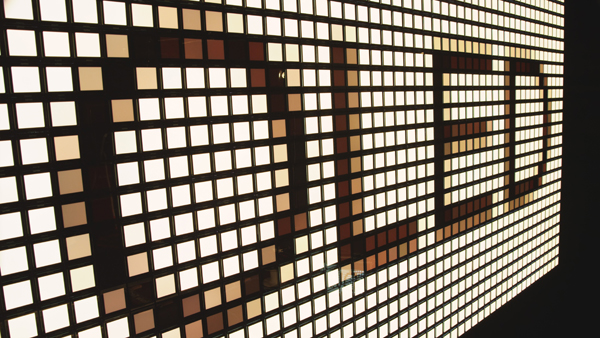
“Lumiblade”, OLED lighting at Philips. Lumiblade is a large-area diffuse light source. Photography courtesy of Philips
The purpose of electrical lighting from the Victorian era up to some years ago was to create an object purely to be a source of light. Led have been challenging this concept as lighting can be integrated within other materials making not clear the line between light and object. OLEDs are one step ahead as the source of light is “a film” making it possible it to be part of walls, ceilings, windows without being noticeable except when lit. The implications in interiors are massive. The technology is not yet advanced enough to make it available for big surfaces, so the limit now is approx 15 cm. It is worth having a look at it.
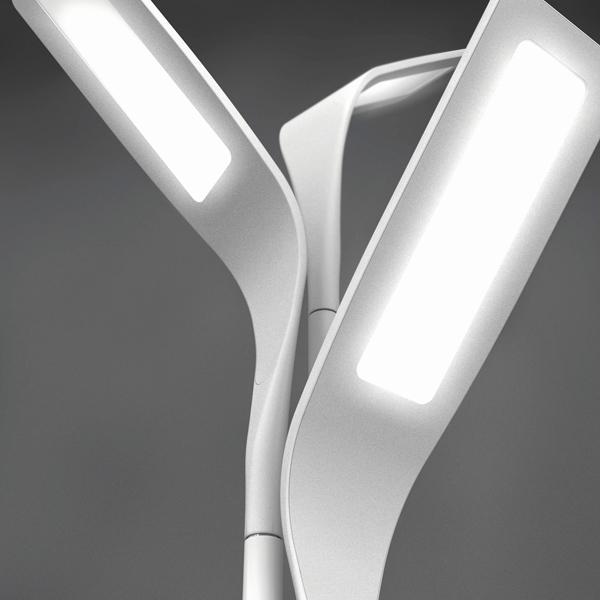
“Edge” by Established and Sons. Photography courtesy of Philips
Priva-Lite by Saint-Gobain Quantum Glass
In countries like ours where sunlight is not always generous, glass is becoming more and more popular as we want to get the most natural light. Of course as a consequence it brings problems of privacy. This special switched glass solves this problem thanks to a film that changes from transparent to translucent when receiving an electric current.

Photographies courtesy of Saint-Gobain Quantum Glass
E-Glass by Saint-Gobain Quantum Glass
This is the result of the need for having neater spaces, or when glass is the biggest visible surface, besides the floor. Thanks to this technology created in Finland in 1986, the glass surfaces can become a source of heat.
“The heating surface of the glazing is low-emissivity glass: when stimulated by electrodes, the thin oxide coating over the inner face on the side of the vacuum (filled with Argon) radiates heat towards the opposite face. Depending on its composition, it can heat outward or inward, and can melt snow, can prevent condensation, and constitute a source of heat itself.
The power of E-GLAS® is controlled by different electrical features like thermostats or snow-detectors. The laminated version is often used for interior applications like glass separation-walls that heat on both sides and give comfort or replaces the main heating system.”

Photography courtesy of Saint-Gobain Quantum Glass
Corian by Dupont
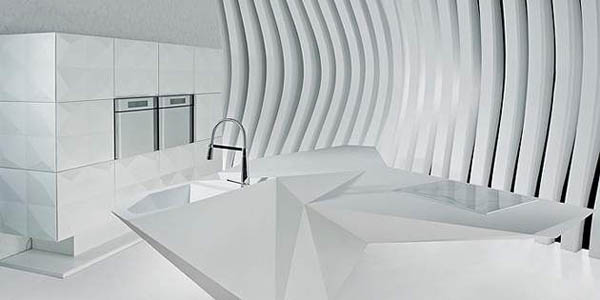
Origami kitchen by Amr Helmy Designs, design Karim Rashid; photo Amr Helmy Designs. Photography courtesy of Corian
Corian is a fascinating material created by Dupont. It is not porous which gives it a special appeal to the health industry and is especially attractive for use in kitchens and bathrooms. It can be thermoformed and engraved. Many of its colours being translucent, it can be used as a light screen as well. The fact that it has a smooth surface and that it can be joined without you noticing the joint makes it a material with a special futuristic look. Creation of curves, angles, textures and special shapes make it a very flexible material.
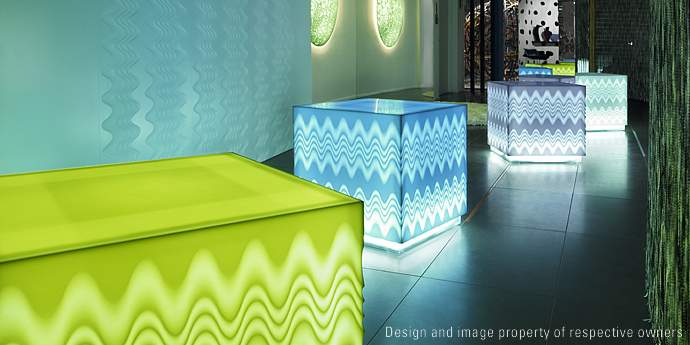
Cell Design Rosita and Luca Missoni, 2008 Milan week of design; photo Leo Torri. Photography courtesy of Corian
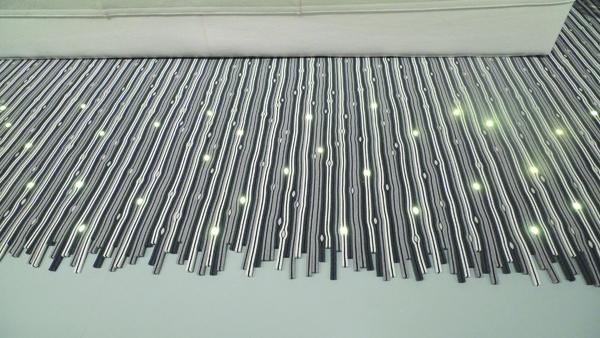
Cell Led carpet by Lama
New materials are fascinating but the reinvention of old ones creates beautiful bridges that link the past, present and future. This carpet made of wool felt has a beautiful design in strips that incorporates a led light in it giving that retro-futuristic look. The colours are fantastic too.
Photography courtesy of Lama
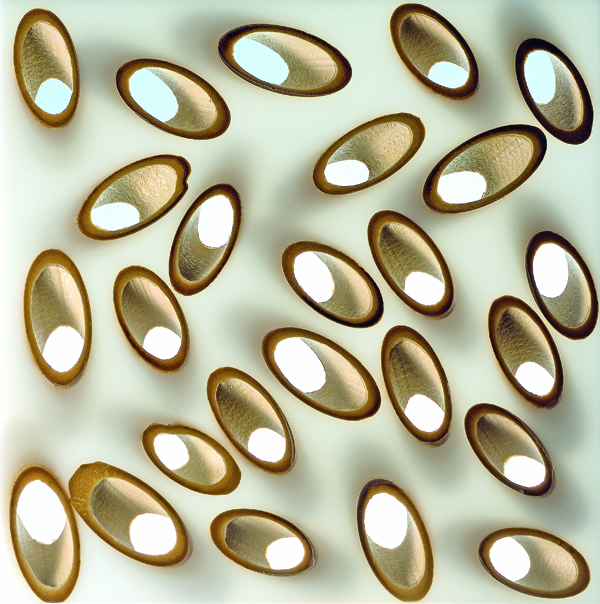
Bamboo Panels by Lama
Bamboo is a very old natural material, full of connotations and very strong aesthetically. Having it mixed with resin creates this beautiful panel. Giving it that edge so attractive and inspiring for interiors tends to push the boundaries while still be loyal to a sort of tradition. The resin plus the diagonal cut brings that contemporary look to it.
Photography courtesy of Lama
“Everlasting Race” by Mathias Vef
Art has always tried to express/interpret how we see, perceive and understand our present and look into the future as well, and it has done that using the available tools of the era where it was created: stone, ink, paint, charcoal, metal, etc. In this sense it is totally logical the way some art is made today. It is formed to represent the current media: video, music, digital images and the creation of a reality that belongs more to the world of perception and imagination tempered by virtual worlds. How that outcome achieves the understanding of our raw reality is something that each of us has to assess depending on our opinions and sensibilities.
“Everlasting Race” plays with both realities giving a sense of urgency and speed to the dynamic of the city beyond the speed of the machine.
“Root”, by Mathias Vef

Photography courtesy of Mathias Vef
The use of software for altering images of our reality creating a new image still attached to that of its sources is not new as a concept. What is relatively new is the look of that image and its relationship with the space and with the other elements, and sometimes, with itself for creating new interpretations. The creation of fractal images fascinates not just for its primal meaning but for the sense of perfection and creation of another dimension.


